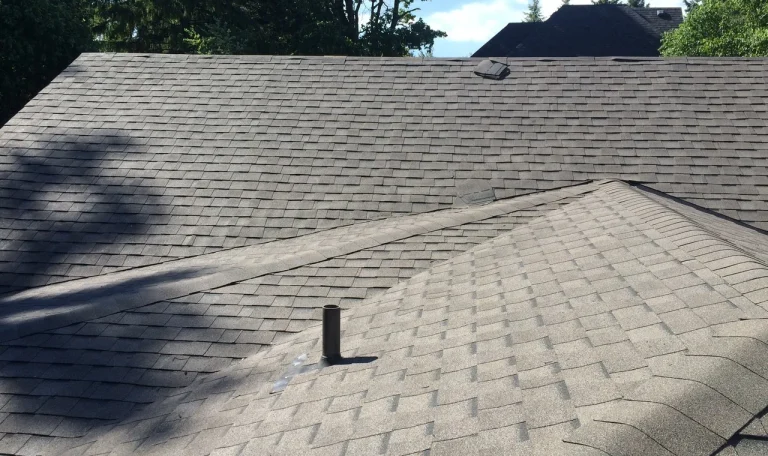
To find a roof leak, start in your attic and look for water stains, wet insulation, or dark spots on the underside of the roof deck. Trace the moisture trail uphill from the ceiling stain, because water rarely drips straight down. It travels along rafters and sheathing before dropping onto your ceiling, which means the actual entry point is almost always higher up and further from the stain than you expect.
After 40+ years of tracking down leaks across Ajax and Durham Region, we can tell you this: most homeowners look in the wrong spot. The stain on your ceiling is where the water ended up, not where it got in. Here’s how to find the actual source.
Step-by-Step: Finding a Roof Leak from Inside
This is where every leak investigation should start. You can do this safely without climbing on the roof.
1. Check the attic during or right after rain. Active water is the easiest way to trace a leak path. Bring a flashlight and look for dripping, wet wood, or water trails on rafters and sheathing. If it’s not raining, look for water stains (dark streaks or rings on wood) and feel insulation for damp spots.
2. Follow the water trail uphill. Water enters the roof and runs downhill along rafters, trusses, or the underside of the sheathing before it drips onto the attic floor or ceiling below. Start at the ceiling stain and trace any discoloration or dampness upward toward the roof peak. The entry point is usually 1 to 3 metres above where the stain appears.
3. Look for daylight. Turn off your flashlight and let your eyes adjust. Pinpoints of light coming through the roof deck indicate holes, gaps, or missing material. Mark these spots.
4. Check around penetrations. The majority of roof leaks happen where something passes through the roof surface: vent pipes, exhaust fans, chimneys, skylights, and satellite dish mounts. Look for moisture, staining, or rust around every penetration.
5. Inspect the underside of valleys. Roof valleys (where two slopes meet) collect the most water. Check the underside of these areas for staining, rot, or wet spots.
6. Mark what you find. Push a nail or screw up through the roof deck at the suspected entry point. This creates a visible marker you can find from outside, so you know exactly where to focus your exterior inspection.
If your home doesn’t have attic access (some designs in Ajax’s 1960s-1980s subdivisions have finished attic spaces or cathedral ceilings), skip to the exterior inspection below.
Finding a Roof Leak from Outside
Once you’ve narrowed the general area from inside, an exterior inspection confirms the source. If you’re comfortable on a ladder and conditions are dry, here’s what to check.
Start at penetrations. Examine every pipe boot, vent cap, chimney, and skylight. Look for:
- Cracked or split rubber vent boots
- Gaps between flashing and the chimney or wall surface
- Rust, lifted edges, or missing caulk on metal flashing
- Cracked or separated skylight seals
Check flashing in valleys and at wall transitions. Valley flashing (the metal channel where two roof slopes meet) should lie flat with no lifted edges. Step flashing where the roof meets a vertical wall should have each piece overlapping properly with no gaps.
Examine the shingles. Look for:
- Missing shingles (obvious gaps in the pattern)
- Cracked or split shingles
- Curling shingles (edges lifting up or tabs cupping)
- Bald spots where granules have worn away
- Nail pops (nails pushing up through the shingle surface)
Check the ridge and edges. Ridge cap shingles along the roof peak take the most wind. Drip edge along the eaves and rakes should be intact with no gaps.
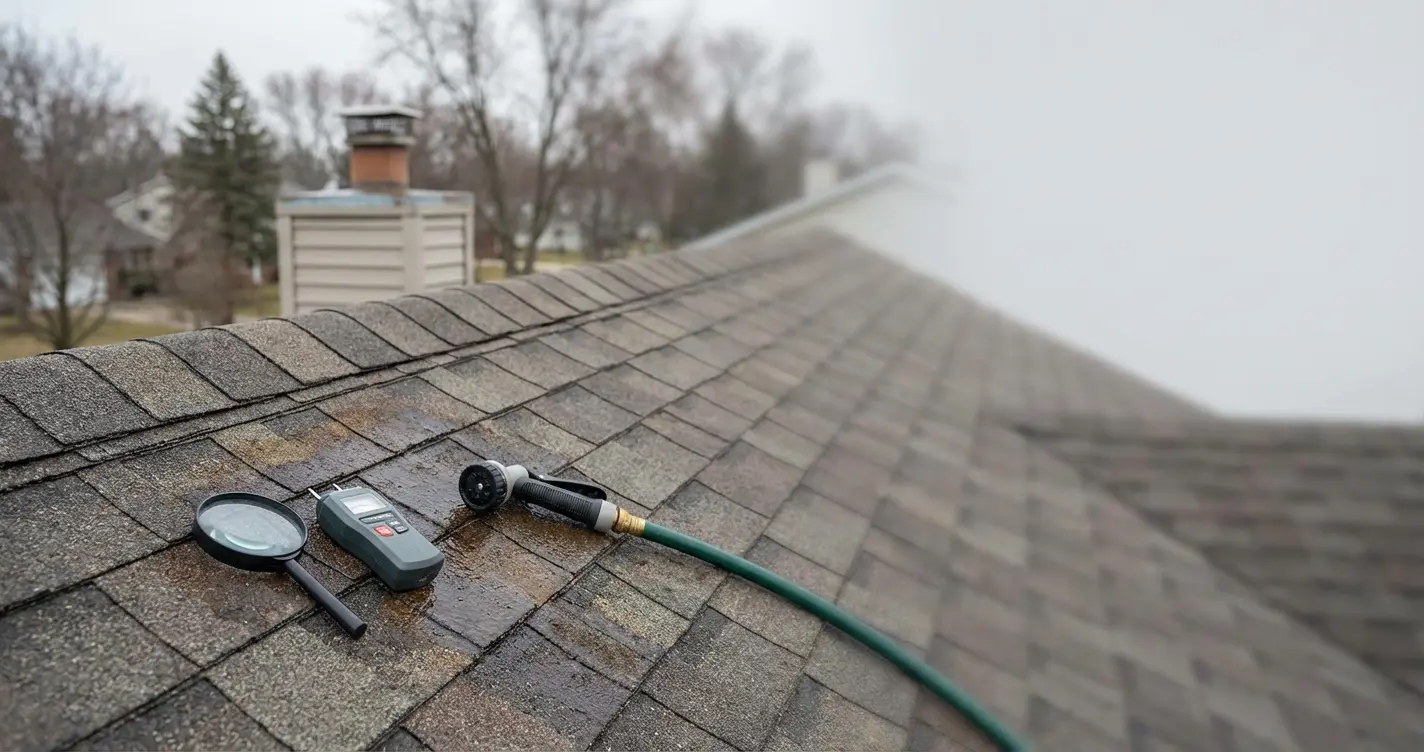
The garden hose test. If you can see a suspicious area but can’t confirm the leak, have someone inside the attic while you run a garden hose over the suspect zone. Start low on the roof and work upward, one section at a time. The person inside calls out when water appears. This isolates the exact entry point.
Most Common Roof Leak Sources in Ajax
Not all leaks are equal. Some are quick fixes, others signal bigger problems. Here’s where we find most leaks in Ajax homes, ranked by how often we see them.
|
|
|
|
|
|
|
|
|
|
|
|
|
|
|
|
|
|
|
|
|
|
|
|
|
|
|
|
|
|
|
|
|
|
|
|
Ajax-specific pattern: In our experience, about 60% of the leaks we repair in Ajax originate at penetration points (chimney flashing, vent boots, pipe collars), not from shingle damage. Homeowners tend to look at shingles first, but the flashing is where Ajax roofs fail most often due to the constant freeze-thaw cycling from Lake Ontario’s influence.
When You Can’t Find the Leak
Some leaks are genuinely difficult to trace, especially in these situations:
- The leak only appears in heavy rain or driving wind. Wind-driven rain can push water uphill under shingles, entering at points that stay dry in normal rain. These intermittent leaks are the hardest to find because conditions aren’t replicable with a garden hose.
- Water travels a long distance before dripping. In homes with low-slope roofs or long rafter runs, water can travel 3 to 5 metres from the entry point before dripping. The ceiling stain and the actual leak may be in completely different areas.
- Multiple entry points. Older roofs in Ajax (20+ years) often have several small entry points that combine into one visible leak. Fixing one doesn’t stop the water because another path takes over.
- Condensation mimics a leak. Poor attic ventilation causes warm, moist air to condense on the underside of the cold roof deck. This looks and behaves exactly like a leak but has nothing to do with the roof surface. The giveaway: condensation is widespread across the deck, while a true leak creates a trail from a single point.
If you’ve done the interior and exterior checks and still can’t pinpoint the source, a professional roof inspection with a trained eye will find it. Professional roofers use systematic water testing, and some use infrared cameras that detect moisture behind surfaces that are invisible to the naked eye.
When to Call a Professional Instead of DIY
Finding the leak yourself is useful, but there are situations where calling a roofer first is the better move.
- Active water entry into your living space. Don’t spend time tracing when water is actively damaging your home. Call for emergency roof repair to stop the water first, then diagnose.
- Steep or high roof. If your roof is 8/12 pitch or steeper, or you have a multi-story home, exterior inspection requires fall protection equipment. This is not a DIY situation.
- Flat roof leaks. Flat roof leak detection is a different process entirely. Water pools rather than flowing downhill, which makes source identification much harder without experience.
- You’ve already tried a repair that didn’t work. Failed DIY repairs often mask the real entry point, making the next repair more complex. If your fix didn’t hold, call a pro before applying another layer of caulk.
- Your roof is over 20 years old. On aging roofs, the leak you found may be one of several developing problems. A professional inspection assesses the whole roof, not just the visible leak, and helps you decide whether repair or replacement is the better investment.
Frequently Asked Questions
Can I find a roof leak without going in the attic?
Yes, but it’s harder. From inside, look for ceiling stains, bubbling paint, or damp spots on upper-floor walls. From outside, inspect all visible flashing, vent boots, and shingles for damage. The garden hose test works without attic access if a second person watches the ceiling from the room below. That said, attic access makes leak tracing significantly faster and more accurate.
Why does my roof only leak in heavy rain?
This usually means the leak is at a point that stays dry in light rain but gets overwhelmed by volume or wind-driven water. Common culprits: clogged gutters backing water under shingles, valley flashing that handles normal flow but overflows in downpours, or wind-driven rain pushing water uphill under shingle edges. In Ajax, southeast-facing slopes that catch Lake Ontario wind are most prone to this.
What is the most common cause of roof leaks?
Failed flashing and seals around roof penetrations (chimney, vents, pipes, skylights) cause the majority of leaks, not missing shingles. In Ajax specifically, freeze-thaw cycling is the primary driver. Sealant expands and contracts until it cracks, and flashing shifts as the underlying structure moves with temperature changes.
How much does it cost to have a roofer find a leak?
Most reputable roofers in Ajax include leak detection as part of a free roof inspection. If the leak requires extensive testing (running water over multiple areas, infrared scanning), some contractors charge $150 to $300 for a dedicated leak investigation. This is typically credited toward the repair cost if you hire them for the fix.
Should I put a tarp on my leaking roof?
A tarp is a good temporary measure if you have an active leak and can’t get a roofer immediately. Use a heavy-duty tarp (not a cheap hardware store one) that extends at least 1 metre past the damaged area on all sides. Secure it with 2x4s screwed into the roof deck, not bricks or weights that blow off. A tarp buys you days or weeks, but it’s not a permanent solution. Schedule the repair as soon as weather and availability allow.
Can’t find the leak? Metro Roofing has tracked down thousands of leaks across Ajax and 12 cities in the GTA over 40+ years. We’ll find it, show you the source, and give you a written repair estimate. Call (416) 417-5656 or request a free inspection any time.