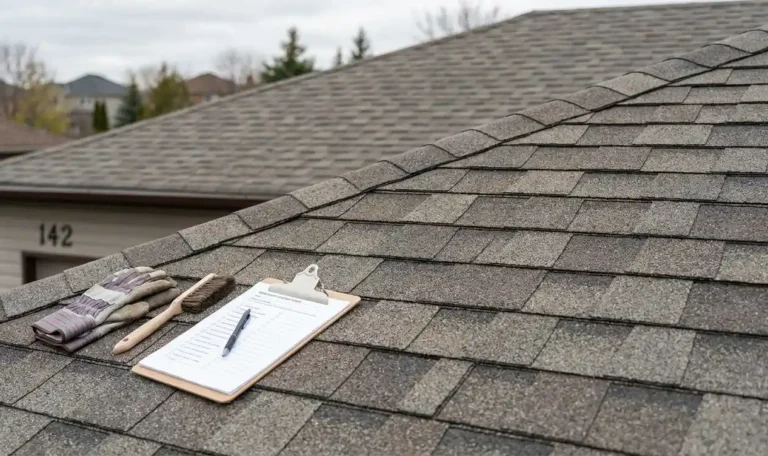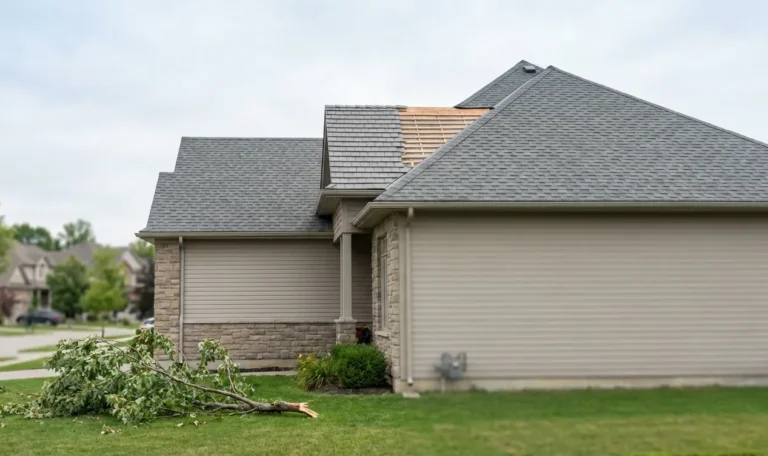
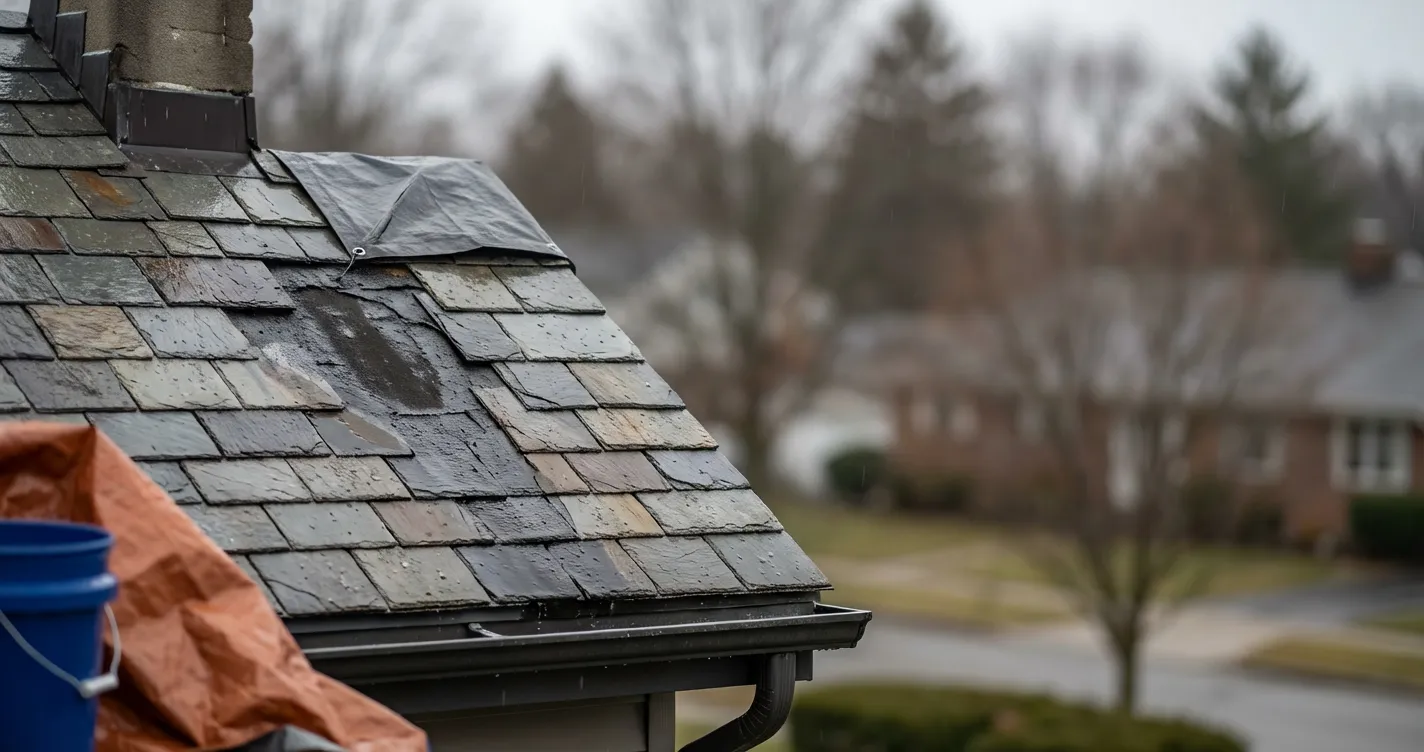
When your roof starts leaking, your first priority is containing the water and protecting your belongings. Move furniture and electronics away from the drip, place a bucket or container underneath, and then focus on finding the source. Do not climb onto a wet roof. Most emergency situations can be managed from inside your home until a professional arrives.
A roof leak during an Ontario rainstorm or spring thaw can go from a small drip to serious interior damage in a matter of hours. We have been responding to emergency roof leak calls across Ajax, Pickering, Whitby, and Durham Region for over 40 years, and the homeowners who act quickly in the first hour almost always end up with less damage and lower repair costs. Here is exactly what to do.
Step 1: Contain the Water Immediately
Before you try to find the leak or call anyone, manage the water that is already inside your home. Every minute counts.
Place containers under active drips. Buckets, pots, garbage bins, whatever you have. If the drip is spread across a wider area, lay down towels or old sheets to absorb water and direct it toward a container.
Move belongings out of the way. Furniture, electronics, documents, and anything water-sensitive should be relocated away from the leak zone. If you cannot move a large piece of furniture, cover it with a plastic tarp or garbage bags.
Handle a bulging ceiling carefully. If your ceiling is sagging or bubbling with pooled water, the water is collecting between the drywall and the floor above. Left alone, the weight can cause the entire section to collapse. Place a large bucket or bin directly underneath, then carefully puncture the bulge with a screwdriver or small nail at its lowest point. This creates a controlled drain and prevents a sudden ceiling collapse. Yes, this causes a small hole, but that is far better than a large section of ceiling falling on your furniture.
Protect your floors. Water running across hardwood or laminate flooring causes warping and damage quickly. Lay plastic sheeting or tarps on the floor under and around the leak area, with towels on top to absorb pooling water.
Turn off electricity in the affected area. If water is leaking near light fixtures, electrical outlets, or wiring, switch off the circuit breaker for that area of your home. Water and electricity are a dangerous combination. If you are not sure which breaker controls the affected area, err on the side of caution and shut off more rather than less.
Step 2: Find Where the Water Is Coming In
Once the immediate water is contained, locate the source. Understanding where the leak originates helps you apply an effective temporary fix and gives the roofer critical information when they arrive.
Start in the attic. If you have attic access, grab a flashlight and look for water trails, wet insulation, dripping, or dark stains on the underside of the roof deck. Water enters the roof and travels along rafters and sheathing before dripping down, so the entry point is almost always higher up than where the drip appears on your ceiling. Follow the wet trail uphill.
Check common failure points. Most leaks in Ajax homes originate at penetrations and transitions, not in the middle of the shingle field. Focus on areas around vent pipes, the chimney, skylights, exhaust fans, and anywhere the roof meets a vertical wall.
Note the location relative to exterior landmarks. “The leak is about 1 metre from the chimney on the south side” is much more useful than “it’s dripping in the upstairs bedroom.” Try to relate the interior leak location to something visible from outside.
Check multiple spots. During heavy rain, it is common for water to enter at one point and split into multiple paths inside the attic. What looks like two separate leaks from below may be one entry point.
For a detailed guide on tracing the source, see our full walkthrough on how to find a roof leak.
Step 3: Apply a Temporary Fix
These are short-term measures to slow or stop the water until a professional can make a permanent repair. None of these are long-term solutions.
Interior patching. If you can access the underside of the leak in the attic, you can slow the water with roofing cement or silicone caulk applied directly to the area where water is entering. Press a piece of plywood or sheet metal against the wet spot and seal around the edges with roofing cement. This is a stopgap to buy you time.
Tarp the exterior (only if safe). If rain has stopped and the roof is dry enough to walk on safely, a tarp over the affected area is the most effective temporary fix. Extend the tarp at least 1 metre past the damaged area on all sides. Weigh down the edges with 2×4 lumber, not bricks or heavy objects that can slide and cause additional damage. Tuck the uphill edge of the tarp under shingles if possible so water flows over the tarp rather than under it.
Do not climb on a wet roof. This needs repeating. A wet or icy roof is extremely dangerous, even with a low slope. In Ajax winters, ice under snow makes roof surfaces nearly impossible to stand on safely. If it is actively raining, snowing, or the roof is icy, do not go up there. The temporary interior fixes will manage the situation until conditions improve or a professional crew with proper safety equipment can respond.
Emergency bucket and tarp from inside. If you cannot access the exterior, hang a tarp from the attic rafters above the leak to channel water into a single collection point. This concentrates the drip into one bucket instead of letting it spread.
Step 4: Document Everything for Insurance
If the leak is caused by a storm, falling tree, ice dam, or other sudden event, your home insurance may cover the repair. Thorough documentation starts right now.
Photograph and video the damage. Capture the active leak, any ceiling damage, water on floors, damaged belongings, and the exterior source if visible. Include wide shots for context and close-ups for detail. Timestamp matters, so use your phone camera, which automatically records date and time.
Document the weather event. Save any Environment Canada weather alerts for the Ajax or Durham Region area. Screenshot local news reports about the storm. If neighbours experienced damage, note that as well. Your claim is stronger when tied to a documented weather event.
Keep receipts for emergency supplies. Tarps, buckets, roofing cement, and any materials you buy for emergency containment. Most insurance policies reimburse reasonable costs for preventing further damage.
Write down the timeline. Note when you first noticed the leak, what steps you took, and when you called for help. Adjusters appreciate a clear, factual account.
For a detailed breakdown of the insurance process, including what is covered and what is not, see our guide on whether insurance covers roof repair in Ontario.
Step 5: Call a Professional Roofer
Temporary fixes buy you hours or days, not weeks or months. Every temporary patch has a limited lifespan, especially through Ontario’s freeze-thaw cycles, where temperatures can swing above and below zero multiple times in a single week during March and April.
Why DIY fixes are temporary. Roof cement cracks in cold weather. Tarps shift in wind. Caulk does not adhere properly to wet surfaces. Interior patches address the symptom (water dripping in) without fixing the cause (the breach in the roof system). We regularly see homes in Ajax where a homeowner applied a “temporary” patch six months ago and now has mould growth, rotted sheathing, or insulation damage that costs far more to repair than the original leak would have.
What to tell the roofer. When you call, provide as much information as possible: where the leak is appearing inside, what the weather was like when it started, whether you found the source in the attic, what temporary measures you have taken, and whether this area has leaked before. This helps the crew arrive with the right materials and a plan.
Emergency service availability. Not all roofing companies offer emergency response. Metro Roofing is available 24/7 for emergency roof repair in Ajax, and we provide same-day response for active leaks throughout Ajax, Pickering, Whitby, Oshawa, and Scarborough.
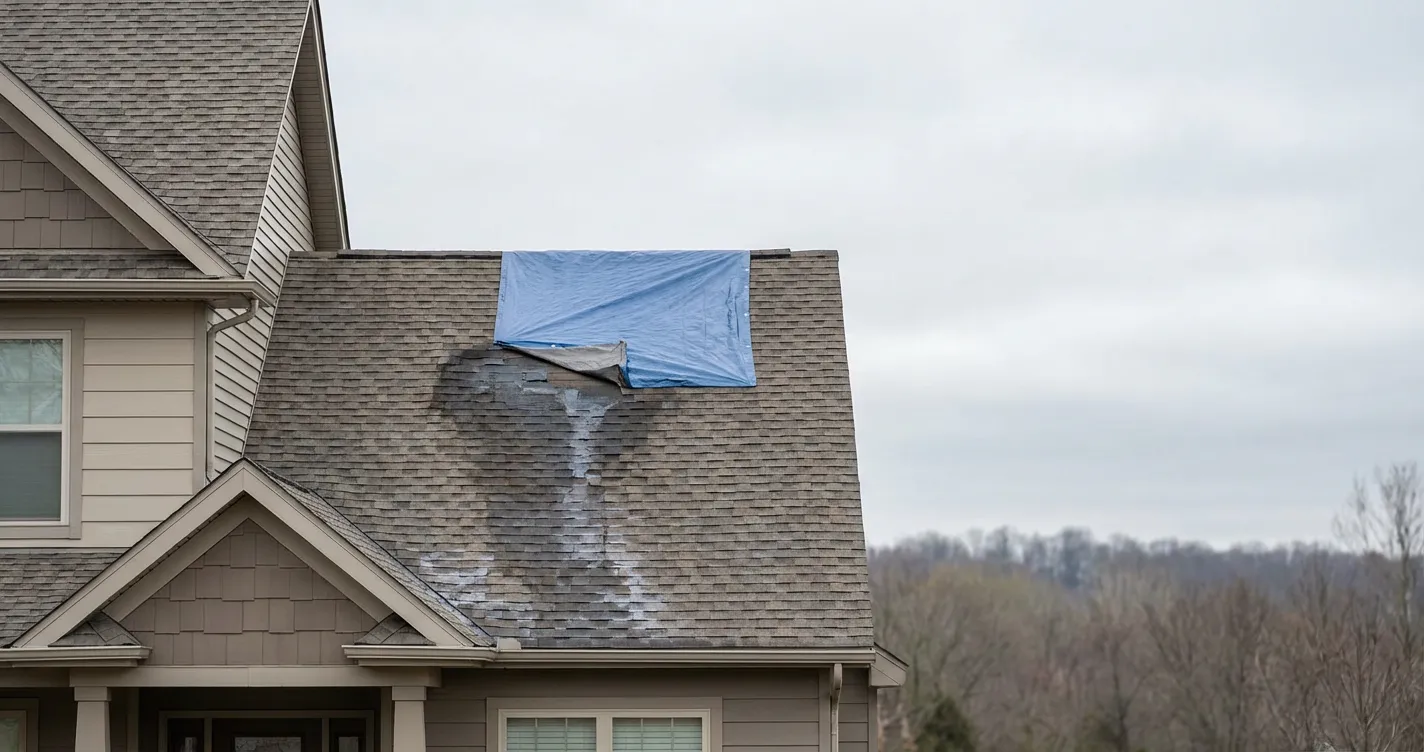
Common Causes of Sudden Roof Leaks in Ajax
Understanding what caused your leak helps you make informed decisions about repair versus replacement.
Ice dams (December through March). Ice dams form along the eaves when heat escaping from the attic melts snow on the upper roof, and the meltwater refreezes at the cold eave edge. The resulting ice ridge traps water, which backs up under the shingles and enters the home. This is the most common cause of winter roof leaks in Durham Region. Homes along the Lake Ontario waterfront and south Ajax are especially prone because of the moisture-laden air.
Spring thaw (March and April). As winter ice and snow melt, water finds every weakness in your roof system. Flashing that was fine in summer may have been compromised by ice movement over winter. This is the busiest season for leak calls in our business.
Storm damage (year-round). High winds off Lake Ontario can strip shingles, peel back flashing, and snap branches onto roofs. After a major storm, damage may not be visible from the ground but can create entry points that leak during the next rainfall.
Deteriorated flashing. The sealant and metal around chimneys, vent pipes, skylights, and wall transitions degrades over time. One heavy rain after the seal fails can send water streaming into your home. Older homes throughout the Westney Road, Harwood Avenue, and Highway 401 corridors are particularly susceptible if the flashing has not been maintained.
Clogged gutters. Gutters packed with leaves and debris cause water to back up under the roof edge. During heavy rain, this can push water behind the drip edge and into the fascia, soffit, and eventually the interior.
For more on what causes roofs to deteriorate, see our page on roof deterioration in Ajax.
When Is a Roof Leak an Emergency vs. When Can You Wait?
Not every leak requires a same-day emergency call. Here is how to gauge the urgency.
Call immediately if:
- Water is actively pouring in (not just dripping)
- The leak is near electrical wiring, outlets, or a breaker panel
- A ceiling is sagging or bulging with pooled water
- A large section of roof is missing (post-storm)
- You cannot safely contain the water with buckets and tarps
- There is standing water on a floor that could reach furniture, electronics, or finishes
Schedule within 24 to 48 hours if:
- The drip is slow and contained in a single bucket
- The leak only appears during heavy rain and stops when rain stops
- The source is visible and isolated (a single cracked vent boot, for example)
- You have successfully tarped the exterior and the tarp is holding
Schedule within a week if:
- You notice a water stain on the ceiling but no active dripping
- The stain is dry and has not grown recently
- You suspect a small leak that only activates during driving rain from a specific direction
Even “non-emergency” leaks should be addressed promptly. A small, slow leak causes cumulative damage: mould, rot, damaged insulation, and compromised structural members. What costs $400 to $800 to fix today can become a $3,000 to $5,000 problem in a few months.
FAQ
Can I fix a roof leak myself as a permanent repair?
For most homeowners, no. Temporary measures like tarping, applying roof cement, or caulking a visible crack can slow the water, but permanent roof repairs require proper materials, technique, and safety equipment. A shingle that looks like the problem from outside may actually be a symptom of failed underlayment or flashing underneath. Without addressing the root cause, the leak returns. For anything beyond a cracked vent boot or a single missing shingle on a low-slope section, call a professional.
How much does emergency roof leak repair cost in Ajax?
Emergency roof repair in Ajax typically ranges from $400 to $1,500 depending on the source and extent of the leak. A simple vent boot replacement or flashing reseal falls on the lower end. More extensive repairs involving sheathing replacement, multiple leak points, or ice dam damage fall on the higher end. For a detailed breakdown, see our roof repair cost guide.
Will my roof leak get worse if I wait?
Yes. Water damage is always progressive. A small drip today means moisture is sitting on wood sheathing, insulation, and drywall. Within weeks, that moisture supports mould growth. Within months, the wood begins to rot. The repair scope expands from a simple leak fix to sheathing replacement, insulation removal, mould remediation, and drywall repair. In Ajax’s climate, freeze-thaw cycles accelerate this process because water expands as it freezes, widening cracks and gaps with each cycle.
Does Metro Roofing offer 24/7 emergency roof repair?
Yes. We provide 24/7 emergency roof repair service across Ajax, Pickering, Whitby, Oshawa, Scarborough, and the wider Durham Region. For active leaks, we offer same-day response. Call 416-417-5656 any time, day or night.
Dealing with a Roof Leak Right Now?
Do not wait for it to get worse. Call the team that has handled emergency leaks across Ajax for over 40 years. We respond same-day for active leaks, provide free estimates, and are available 24/7.
Metro Roofing: 4.9-star rating, 98 Google reviews, 40+ years in business.
Call us at 416-417-5656 or request your free estimate online.