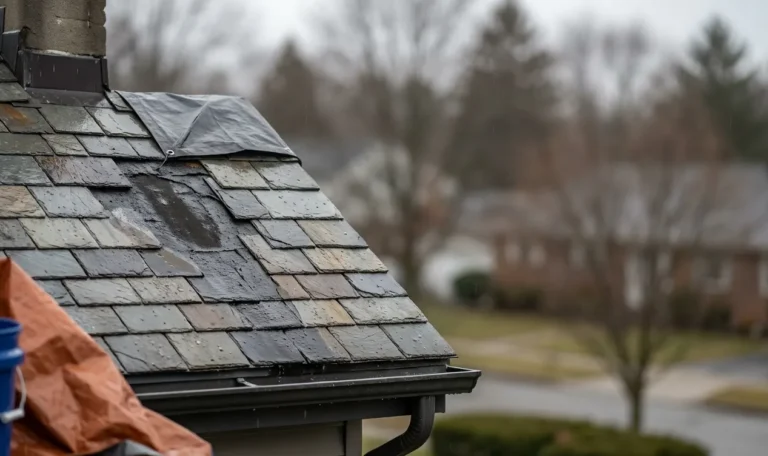
Last winter, an Ajax homeowner saw dark streaks on their roof. A few weeks later, water stains appeared on their attic ceiling. This happens to hundreds of Ajax homes every year. Our location east of Toronto creates special problems that damage roofs faster than in other areas.
This guide shows you the most common Ajax roof problems. You’ll learn how to spot early warning signs. You’ll also know when to call a professional right away.
What Are the Most Common Roof Problems in Ajax, Ontario?
Ajax homeowners see five roof problems more than any others:
- Ice dam formation – Ice traps water under your shingles and causes leaks in your attic
- Shingle blow-offs – Strong winds from Lake Ontario lift up and remove shingles
- Attic condensation damage – Poor air flow creates moisture that rots your roof boards
- Flashing failures – Hot and cold weather cracks the sealant around chimneys and vents
- Granule loss – Sun and hail strip the protective coating off shingles
Most problems show warning signs months before major damage happens. This makes yearly roof checks very important in Ajax. Not sure what you’re seeing on your roof? Schedule a free roof inspection to get expert help.
Why Ajax Roofs Face Special Challenges
Ajax sits in a special weather zone. This creates more roof stress than many other Greater Toronto Area towns. We’re close to Lake Ontario. This brings wet air that freezes when it touches cold surfaces in winter. This wears down roofing materials faster than in areas farther from the lake.
Temperatures change a lot between lakefront neighborhoods and areas near Rossland Road. The difference can be several degrees on the same day. Warm air from the lake meets cold air from land. This creates perfect conditions for ice to form. In our 40+ years serving Ajax, we’ve seen these freeze-thaw cycles happen more here than in downtown Toronto.
Neighborhoods near Westney Road and Highway 401 get hit by stronger winds. Areas farther north have more protection. These winds don’t blow steady. They gust and swirl around roof features. This pulls at shingles that aren’t sealed well.
Snow also falls differently across Durham Region. Lake-effect snow dumps more on Ajax than on towns just 20 kilometers inland. This extra weight stresses your roof structure. It also creates perfect conditions for ice dams along roof edges.

Ice Dams and Winter Water Damage in Ajax Homes
Ice dams cause more emergency calls than any other roof problem in Ajax. These thick ice ridges form along roof edges. Here’s how it happens: Heat escapes from your attic and melts snow on your upper roof. The water runs down toward the edge. It refreezes there because the overhang doesn’t have attic heat below it.
This cycle repeats over and over. Ice builds up and creates a dam. Melting snow from above pools behind this ice barrier. It has nowhere to drain. Eventually, water backs up under your shingles. It seeps into your attic, ceiling insulation, and wall spaces.
Warning signs appear before major damage happens:
- Icicles longer than six inches hanging from gutters
- Water stains on ceilings near outside walls
- Frost on attic rafters or insulation
- Water spots that appear during temperature changes
- Sagging or stained panels under your roof edge
Ajax’s lake-effect snow makes ice dam problems worse. Heavy, wet snow from Lake Ontario packs down on roofs. It holds more water when temperatures rise. When we check Ajax roofs after January thaws, we often find big damage that wasn’t visible from the ground.
Good attic air flow and insulation work together to prevent ice dams. Ridge vents along roof peaks let warm air escape. Soffit vents under your eaves pull cold air in. This creates air flow that keeps your roof deck cold in winter. This stops the melt-freeze cycle before it starts. However, many older Ajax homes near Harwood Avenue and Rossland Road don’t have enough air flow. This makes them easy targets for ice dams.
If you spot active ice dam damage with water entering your home, you need help right away. Ice dams found during routine winter checks can often wait until spring. This is when conditions are safer for roof work.
Shingle Blow-Offs from Ajax Wind Patterns
Winds from the southwest sweep across Lake Ontario. They hit Ajax with full force from November through March. These winds are strongest during winter storms. They come when freezing temperatures make shingles stiff and easy to break.
Edges and corners lose shingles first. Wind creates lift at these spots. When wind flows over your roof, it doesn’t move smooth. It creates swirls around chimneys, dormers, and roof peaks. These swirls push up on shingle tabs. This is especially true if the sticky strip has gotten old and weak.
From the ground, you can spot problem areas by looking for:
- Shingle edges that look raised or curled
- Missing shingles that create dark patches
- Shingle tabs that flap on windy days
- Exposed black paper or roof boards
- Small stones collecting in gutters or on the ground
One or two missing shingles are a simple fix. This stops water from getting in. We can match your shingle color and seal new pieces in place. However, lots of missing shingles across a big area signals deeper problems. The whole section may need replacement if wind damaged the materials underneath.
Waiting until spring to fix winter shingle damage is risky. Water gets into exposed areas every time it rains. Each time increases the risk of rotted boards, damaged insulation, and ceiling stains. If you’re seeing shingle problems, our roof repair services in Ajax can check the damage and fix it to protect your home.
Most At-Risk Roof Areas in Ajax Homes
- Roof ridges and peaks (wind hits hardest here)
- Southwest-facing slopes (direct wind from Lake Ontario)
- Corners where two roof sides meet
- Areas around chimneys and skylights
- First three feet from roof edges
Attic Condensation Damage in Ajax’s Cold Climate
Many Ajax homeowners don’t know their roof is failing until they spot problems inside the house. Attic condensation damage happens quietly over months or years. It rots roof boards from underneath before you see any signs outside.
Ajax’s winter temperature swings create perfect conditions for condensation. Your heated living space warms the attic. Outside temperatures drop below freezing. When warm, wet air from your home rises into a cold attic, water forms on cold surfaces. This includes roof boards, rafters, and the bottom of shingles.
This moisture shows up as frost on attic rafters during very cold weather. When temperatures warm up, the frost melts and soaks into wood. This happens over and over. It creates water stains on roof boards and a musty smell in the attic. Eventually, it causes rot that weakens your whole roof system.
Good air flow prevents condensation. It keeps attic temperatures close to outside temperatures. Ridge vents along roof peaks let warm air escape. Soffit vents under your eaves pull cold air in. This creates steady air flow that sweeps moisture out before it can turn into water drops.
The National Roofing Contractors Association says good attic air flow is very important for homes in cold climates. This is especially true where snow sits on roofs for long periods. Air flow removes extra moisture from attics. It prevents condensation that can damage roof boards and ice dam formation.<sup>1</sup> Many Ajax homes built in the 1980s and 1990s don’t meet today’s standards. This is especially true for older homes near Lakeridge and Duffins Creek. We often find poor air flow during our checks.
Insulation quality matters just as much as air flow. Good attic insulation creates a barrier. It keeps heat in your living space instead of warming the attic. Without enough insulation, heat escapes through your ceiling. It warms the attic air and creates the temperature difference that causes condensation.
4-Step Attic Air Flow Check You Can Do Yourself
- Look for frost or moisture – During winter, check attic rafters for frost or water stains
- Count your vents – Find ridge vents along roof peaks and soffit vents under eaves
- Check insulation depth – Measure attic insulation (should meet current requirements for Ajax’s climate)
- Smell for mustiness – Constant musty smells mean moisture problems
Fixing condensation damage costs much more than preventing it. Water-damaged boards need to be removed and replaced. This often means taking off shingles across large roof sections. Professional checks find air flow problems before they destroy your roof structure.
Why Roof Flashing Fails Faster in Ajax
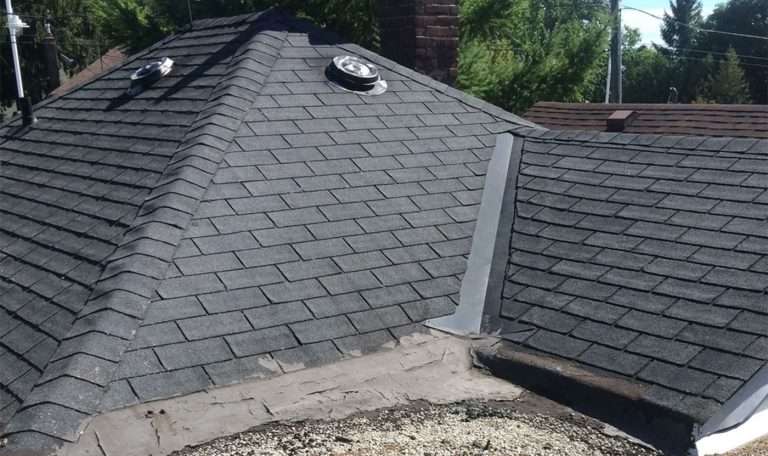
Even with perfect attic air flow, Ajax’s temperature swings still cause problems at roof openings. Flashing works as waterproof sealing around chimneys, plumbing vents, skylights, and roof valleys. It goes anywhere your roof surface has a break.
Most flashing uses metal parts with flexible sealant. The metal directs water away from openings. Sealant fills gaps and bonds the flashing to materials around it. Both materials get bigger and smaller as temperatures change. But they do this at different speeds.
During typical Ajax winter days, temperatures can swing a lot from night to morning. Metal flashing gets bigger and smaller over and over with these changes. This stresses sealant joints until small cracks appear. Water seeps through these cracks and runs under shingles. It often travels several feet before dripping into your attic or wall spaces.
You can catch flashing problems early by looking for:
- Rust stains on or around flashing metal
- Lifted edges where flashing pulls away from shingles
- Missing or cracked caulking around openings
- Dark stains on ceilings or walls near chimneys
- Daylight visible through gaps in attic (when looking up at roof openings)
Quick Tip: Check flashing twice per year. Do it once in spring after winter damage. Do it again in fall before winter weather starts. Finding problems early saves thousands in water damage repairs.
Flashing repairs need to be done fast. Small leaks cause major damage inside. Water that enters through failed flashing can rot wall studs and damage insulation. It can create mold growth long before you notice ceiling stains. A small flashing repair investment prevents big water damage repair costs.
Modern flashing materials handle Ajax’s temperature changes better than older products. Ice and water shield membranes, copper flashing, and high-quality synthetic sealants last longer in our climate than old tar-based products.
How Ajax Weather Speeds Up Shingle Aging
Asphalt shingles rely on protective stones stuck in their surface. These ceramic-coated mineral stones shield the tar layer underneath from sun damage and impacts. Without this protection, shingles break down fast from sun exposure and wear.
Ajax roofs lose these stones faster than many homeowners expect. Our climate combines sun exposure, hail damage, and big temperature changes. Each time your roof heats up and cools down, shingles get a little bigger and smaller. This slowly loosens the bond between stones and the tar mat underneath. Over years, more stones wash away with each rain.
Checking for stone loss takes just a few minutes:
- Look in gutters and downspouts for stone buildup (looks like coarse sand)
- Look for bare spots on shingles where the black tar layer shows through
- Notice if shingle edges curl up or corners lift
- Check for shiny, smooth areas where stones have worn away completely
New asphalt shingles naturally shed some stones during their first year. This is loose material from when they were made washing off. After this first period, healthy shingles lose stones much more slowly. If you’re finding heavy stone deposits in gutters after the first year, your shingles are breaking down faster than normal. Our gutter repair service help you save cost of maintenance in your property.
Shingles that have lost a lot of their stone coverage have reached the end of their useful life. You may still have several years left before the roof fails completely. But this is the point where replacement makes financial sense. Continuing to patch and repair a roof with lots of stone loss costs more over time than installing a new roof.
When deciding between patching and replacing, think about both how much stone loss you see and how old your roof is. A newer roof with minor stone loss in small areas can be patched. An older roof with moderate to severe stone loss across many slopes should be replaced. Our team gives honest assessments that help you make the best money decision.
How to Know If Your Ajax Roof Problem Needs Quick Repair
Not every roof problem needs emergency service. Understanding the difference between urgent repairs and issues that can wait helps you make smart choices about timing and money.
Emergency Repair vs. Can Wait
| Needs Quick Repair | Can Wait for Scheduled Check |
| Active leak with water entering home | Minor stone loss affecting small areas |
| Large area of missing shingles | Single missing shingle in safe location |
| Sagging roofline or visible structural damage | Small gap in flashing with no inside water signs |
| Storm damage with exposed roof boards | Slight shingle curling on older roof |
| Ice dam causing inside water damage | Discolored shingles with no leaks |
Red flags that need same-day or same-week service include any situation where water actively enters your home. Also included are big sections of missing shingles that expose underlayment. Visible structural problems like sagging also need quick attention. These conditions get worse fast. They cause damage to insulation, ceilings, and wall structures.
Issues that can wait for scheduled checks include single shingle loss, minor stone buildup in gutters, and small flashing gaps that haven’t produced inside water signs. These problems still need professional attention. But waiting one to two weeks for an appointment won’t cause big additional damage.
Season timing matters for repair choices. Problems found in October should be fixed before winter weather makes roof work dangerous and less effective. The same issue found in March can often wait until April. This is when conditions improve and materials work better during installation.
A homeowner in Lakeridge called us about missing shingles after a windstorm. They had lost several shingles on their south-facing slope. They noticed no inside water damage. We scheduled a repair for the next week. We sealed the exposed area during our visit. Because they called quickly instead of waiting months, we prevented winter moisture from getting into the roof boards.
Free checks provide value even when your roof just needs watching. Knowing your roof’s current condition helps you budget for future work. It gives you peace of mind that small issues won’t turn into emergency repairs. We give honest assessments. We tell you exactly what you need—not what makes the biggest bill.
Whether you need emergency repair or a seasonal checkup, Metro Roofing has helped Ajax homeowners solve roof problems for over 35 years. We give honest advice and upfront pricing for every situation. Learn more about our complete roof repair services in Ajax, contact us today, or call 416-417-5656 to schedule your free roof inspection in Ajax, Pickering, or anywhere across Durham Region.
References
- National Roofing Contractors Association. “Resources – Roofing Guidelines.” NRCA, https://www.nrca.net/roofing-guidelines/resources. Accessed 24 Feb. 2026.