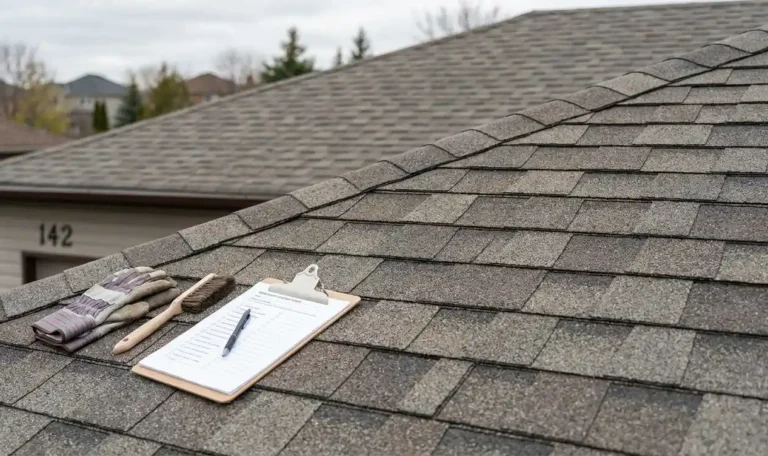
A roof rarely fails all at once. It fails at a cracked shingle, a lifted piece of flashing or a clogged valley, and it stays quiet about it until water reaches a ceiling. A roof inspection is how you find those small failures while they are still small and still cheap to fix.
This guide explains what a professional roof inspection actually covers, what the inspector is looking for on the roof and in the attic, what you should get at the end of it, and when an Ajax homeowner should book one. We have been inspecting and repairing roofs across Ajax and Durham Region for more than 40 years, so this is written from the roof, not from a brochure.
The short answer
A proper roof inspection has two halves:
- Outside, on the roof: shingles, flashing, valleys, vents, chimneys, skylights, eavestroughs and the edges where water leaves the roof.
- Inside, in the attic: moisture stains, daylight through the deck, insulation, and whether the attic is ventilated well enough to stay dry in winter.
At the end you should know three things: what condition the roof is in, what needs attention now, and what can safely be watched. If an inspection only covers the first half, it is not a full inspection.
What we check on the roof

Shingles
Asphalt shingles tell you their age long before they leak. The inspector looks for:
- Granule loss. Bare, shiny patches, or granules collecting in the eavestroughs, mean the shingle is losing its protection from the sun.
- Curling and cupping. Edges that lift or corners that turn up let wind get underneath and drive rain sideways.
- Cracked, lifted or missing shingles. Usually wind damage, and often concentrated on the side of the house that faces the prevailing weather.
- Exposed or backed out nails. A nail that has lifted punctures the shingle above it, and that hole sits directly over the deck.
Flashing
Most leaks we are called to are not shingle failures. They are flashing failures. Flashing is the metal or membrane that seals the joints where the roof meets something else: a chimney, a wall, a skylight, a vent. We check that it is still sealed, still fastened, and not rusted through or pulled away by the house settling.
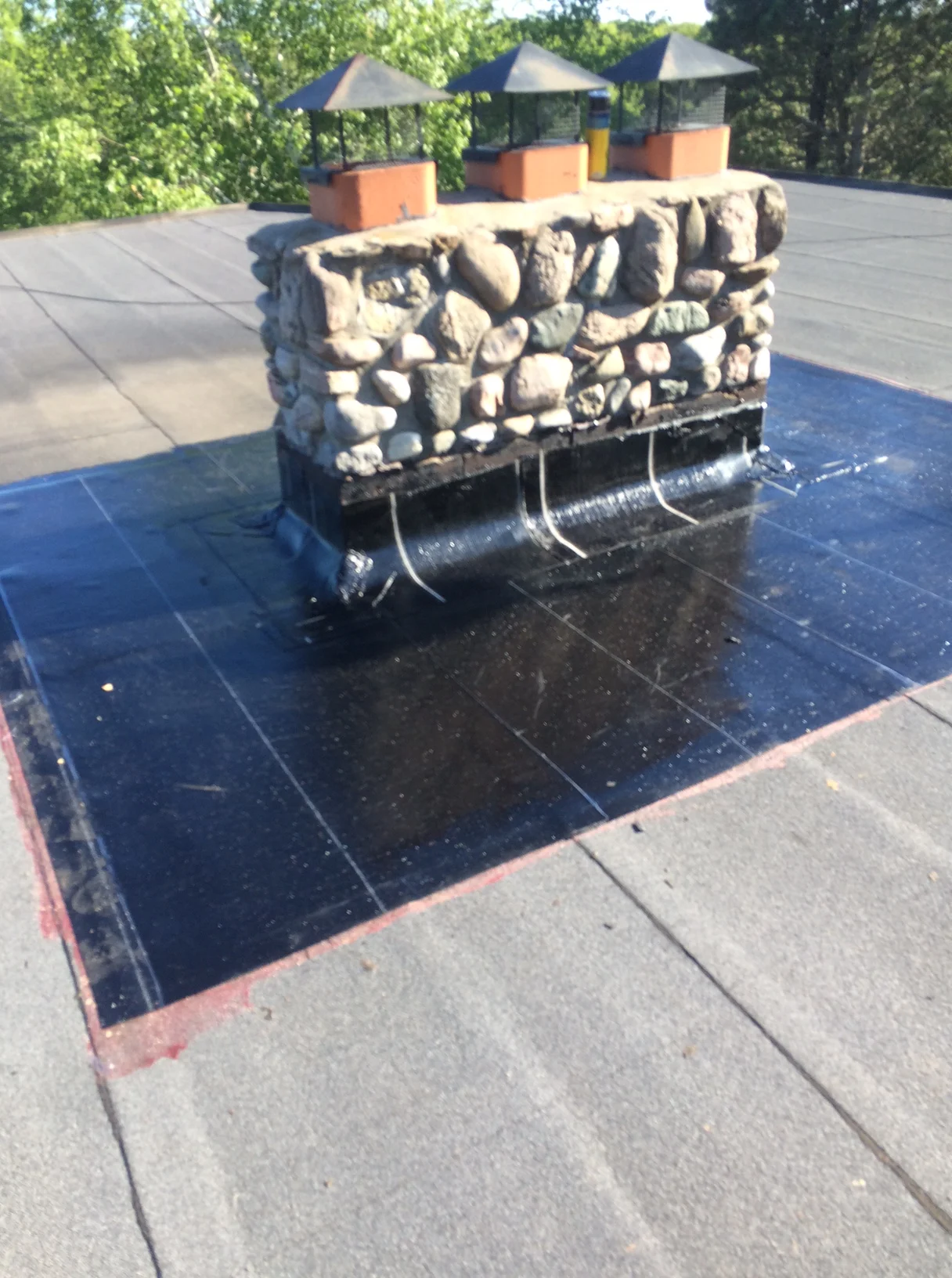
Chimneys deserve particular attention. The masonry moves differently from the roof around it, so the seal at the base is under constant stress. A cracked crown or loose counter flashing on a chimney is one of the most common sources of a leak that appears to come from nowhere.
Valleys, vents and skylights
Valleys are where two slopes meet and where the most water on the roof travels. Debris collects there, and a worn valley leaks heavily. Plumbing vents have rubber boots that crack with age and sun, usually years before the shingles around them wear out. Skylights are checked at the frame and the flashing, and for condensation between the panes.
Eavestroughs and the roof edge
Eavestroughs are part of the roof system. When they clog or sag, water backs up under the first course of shingles and rots the fascia and the edge of the deck. We check that they are clear, pitched toward the downspouts, and firmly attached. If they need work, our eavestrough service handles it on the same visit where possible.
What we check in the attic
The attic is where a roof problem shows up first, often months before a stain appears on a ceiling. This half of the inspection is the one most often skipped, and it is the one that answers the most questions.
- Moisture and staining on the underside of the deck and the rafters, especially around chimneys, vents and valleys.
- Daylight through the boards, which means an opening water can follow.
- Frost or mould on the underside of the deck in cold months, which almost always points to a ventilation problem rather than a leak.
- Insulation that is compressed, wet or blocking the soffit vents.
- Ventilation balance between the intake at the soffits and the exhaust at the ridge or roof vents.
Ventilation matters more in Ajax than most homeowners expect. A poorly ventilated attic stays warm in winter, melts the snow on the upper roof, and the water refreezes at the cold eaves. That is how ice dams form, and ice dam damage at the eaves is one of the problems we see most often on Ajax homes.
What you should get at the end
An inspection is only useful if you understand what was found. At the end of ours you get:
- An honest assessment of the roof’s overall condition.
- A clear separation between what needs repair now and what can be monitored.
- Recommendations for the next step, whether that is a small roof repair, regular maintenance, or planning for a replacement.
Whoever inspects your roof, ask them to show you what they found. A good roofer will point to the specific shingle, seal or stain, not just tell you the roof is “getting old.”
When to book a roof inspection
1. Before winter
Fall is the best time of year to inspect a roof in Durham Region. Freeze and thaw cycles open small gaps wider every time water gets in, freezes and expands. A loose shingle or a cracked vent boot that is fixed in October is a minor repair. The same defect found in March, after a winter of ice, is often a ceiling, insulation and decking job as well.
2. After a major storm
High winds and hail can damage a roof without leaving anything obvious from the ground. If neighbours are having roofs repaired after a storm, have yours checked, even if nothing is leaking yet. If the damage is significant, see our page on storm damage roof repair in Ajax.
3. Before you make an insurance claim
Insurers generally distinguish between sudden damage and gradual wear. A documented inspection helps show which one you are dealing with. Our guide to whether home insurance covers roof repair in Ontario explains how that distinction usually plays out.
4. When the roof reaches 15 to 20 years
Asphalt shingle roofs in Ontario commonly last around 20 to 25 years. An inspection in the years before that tells you whether you have time left or should start planning, so the replacement happens on your schedule rather than after a leak. Our roofing materials lifespan guide covers how long each type of roof typically lasts, and our roof replacement cost guide for Ajax explains what to budget.
5. Before you buy or sell a home
A general home inspection looks at the roof, but usually from the ground or a ladder at the eaves. A roofer’s inspection covers the whole roof surface and the attic. For a buyer, that can change what you offer. For a seller, it means no surprises after the buyer’s inspection.
Signs you should not wait for a scheduled inspection
Some symptoms mean the roof needs looking at now, whatever the season:
- Water stains on a ceiling or upper wall, even dry ones
- Shingles or pieces of shingle in the yard
- Heavy granule build up in the eavestroughs
- A sagging section of the roof line
- Peeling paint or damp patches near the eaves
- Rising heating bills alongside a cold or damp attic
Our article on seven roof warning signs Ajax homeowners miss goes through these in more detail. If you have an active leak, call us directly rather than booking an inspection.
Inspection versus a quote
A quote prices a job you already know you need. An inspection finds out what the roof actually needs, and sometimes the answer is that it needs nothing yet. That is the point of it. Plenty of Ajax homeowners call us expecting to hear they need a new roof and leave with a small repair and a few more years of service.
Between inspections, our roof maintenance checklist for Ajax homeowners covers the checks you can safely do yourself from the ground.
Frequently asked questions
How often should a roof be inspected?
Once a year is a sensible routine for most homes, ideally in the fall, plus after any severe storm. Older roofs and roofs with a history of leaks benefit from being checked more often.
Do I need to be home for a roof inspection?
For the roof itself, no. For the attic, someone needs to let us in, and the attic half of the inspection is the part that catches problems early, so it is worth arranging.
Can a roof be inspected in winter?
The attic can be inspected at any time of year, and winter is actually a good time to spot ventilation problems and frost. A full roof surface inspection depends on snow and ice, so the outside may need to wait for a clear day.
What happens if the inspection finds nothing wrong?
Then you know where you stand, and you have a record of the roof’s condition on that date. That is useful for insurance, for resale, and as a baseline for the next inspection.
Is a roof inspection free?
Metro Roofing offers free, no obligation roof inspections across Ajax. You only pay if you decide to go ahead with work we recommend.
Book a roof inspection in Ajax
Metro Roofing has inspected and repaired roofs across Ajax, Pickering, Whitby and the rest of Durham Region for more than 40 years. If your roof is approaching 20 years old, has been through a hard storm, or you simply want to know where it stands before winter, book a free roof inspection in Ajax or call us at 416-417-5656. You can also reach us through our contact page.